Nutrition Label Software vs Lab Testing: Which to Use
FDA does not require lab testing. How database and lab values are checked under 21 CFR 101.9(g), what each costs, and when a lab test is worth paying for.
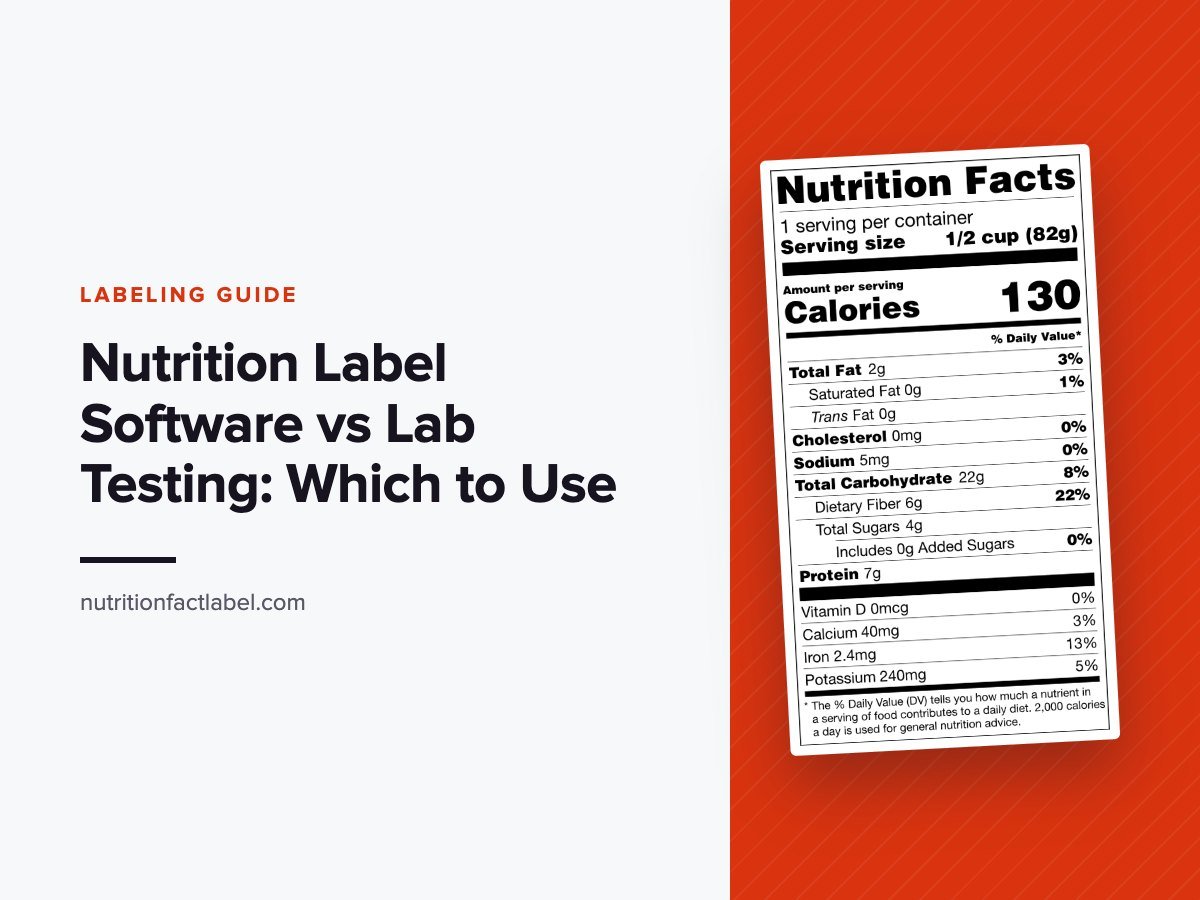
FDA does not require lab testing for a Nutrition Facts label. You can calculate the values from a reliable nutrient database such as USDA FoodData Central, measure them in a lab, or combine the two. Whichever method you use, the declared values must meet FDA's compliance rules when FDA tests the product, and the responsibility for that stays with you.
Software (database) analysis costs from $0 to a few hundred dollars per label and updates instantly when a recipe changes. A lab analysis costs about $1,075 to $1,660 per sample at the labs in our nutrition label cost guide and takes one to three weeks.
How FDA checks a label
Under 21 CFR 101.9(g), FDA compares a lab analysis of a composite sample with what the label declares. Nutrients fall into groups. For nutrients added to fortify a food (Class I), the measured amount must be at least 100% of the declared value; for naturally occurring nutrients such as protein, fiber, vitamins and minerals (Class II), at least 80%. For calories, sugars, total fat, saturated fat, trans fat, cholesterol and sodium, the measured amount must be no more than 120% of the declared value. FDA's Nutrition Labeling Manual, a guide for developing and using nutrient databases, describes how calculated values can be built to meet these rules.
So the question is not which method is allowed, but which one gives numbers that hold up for your product. The rounding rules apply either way.
Software vs lab testing at a glance
| Software (database) | Lab testing | |
|---|---|---|
| Cost per label | $0 to about $250 | About $1,075 to $1,660 |
| Time | Minutes | About 1 to 3 weeks |
| Reformulation | Recalculate in seconds | New sample, new fee |
| Accuracy depends on | Matching ingredient records, weights and yield | A representative sample and the methods used |
| Other countries | Same recipe, other formats | Results converted by hand |
When database values work well
Calculated values work best when every ingredient has a good match in the database and you know the finished weight, so moisture loss in baking or cooking can be accounted for. That covers most baked goods, sauces, dressings, snacks and prepared foods made from standard ingredients. The nutrition database shows the USDA records behind the calculation, and charts such as the beef cuts and bread and tortilla guides show how much the choice of record matters.
When a lab test is worth it
Pay for a lab when processing changes the food in ways a recipe cannot predict: deep frying (oil uptake), fermentation, long reductions, or a process that removes part of an ingredient. A lab is also the safer choice for a novel or proprietary ingredient with no reliable database record, for a value that sits close to a claim threshold such as "low fat" or "low sodium", and when a retailer or co-packer asks for lab data. Many brands combine the two: lab-test the product once, then use a database calculation, checked against that result, for later recipe changes.
How to decide for your product
Start with a database calculation in the nutrition label maker: it is free for US FDA labels and tells you how close any value sits to a claim threshold. If the product is fried, fermented or built around an unusual ingredient, budget for a lab test; the food testing lab finder lists accredited labs by country. For tool choice, see the nutrition label software page.
Source and method
Compliance rules: 21 CFR 101.9(g). Prices: labs' and analysis services' own websites, checked 31 October 2026, excluding tax, shipping and rush fees. This guide is general information about US labeling, not legal advice for a specific product.